Mise en Place: A Home Cook's Guide to Calm Cooking
Ever feel chaotic while cooking? "Mise en place" is a simple prep system that brings calm and control to your kitchen, making any recipe easier.
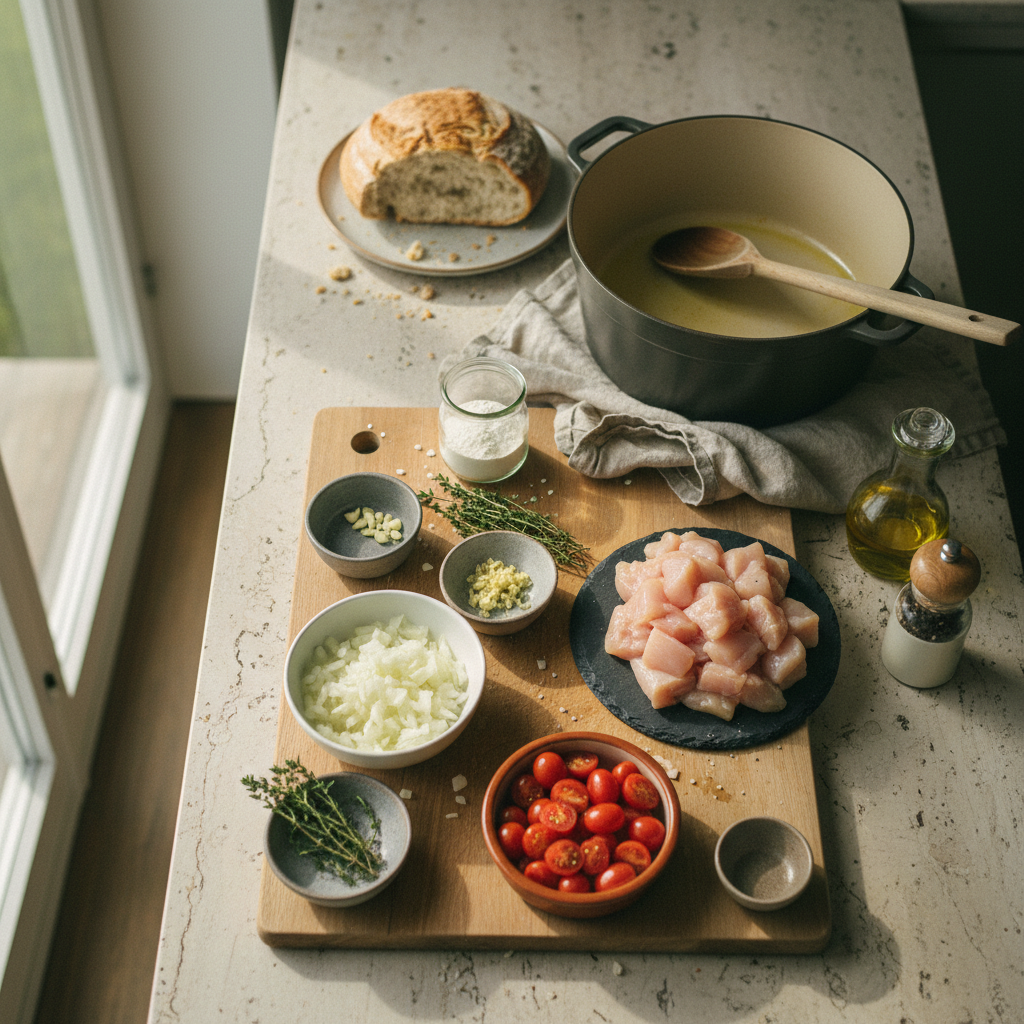
Mise en place is a French culinary term meaning "everything in its place," which involves preparing and organizing all your ingredients before you start cooking. By chopping vegetables, measuring spices, and preparing sauces ahead of time, you transform cooking from a frantic scramble into a smooth, enjoyable process. This simple habit prevents mistakes, reduces stress, and ultimately helps you make better-tasting food with much less effort.
We’ve all been there. You’re in the middle of a new recipe, the oil is shimmering in the pan, and you’ve just tossed in the onions. The recipe says to add the minced garlic 30 seconds later, followed by the diced carrots and celery. But the garlic isn’t minced yet, and the carrots are still sitting whole on the counter. Your onions start to burn while you frantically chop, and the whole experience devolves into a stressful, smoky mess.
The antidote to this kitchen chaos is a simple, powerful technique used by chefs all over the world: mise en place.
What Exactly Is Mise en Place?
Mise en place (pronounced MEEZ-on-plahss) is a French culinary term that translates to "everything in its place." At its core, it's the practice of gathering, preparing, and organizing all the ingredients and tools you need for a recipe *before* you start the actual cooking process. This means all your vegetables are chopped, your spices are measured, your sauces are mixed, and your pans are ready to go.
It’s not a fancy or exclusive technique reserved for restaurant chefs. It’s a fundamental habit that any home cook can adopt to make cooking more efficient, enjoyable, and successful. Think of it as creating a personal cooking show setup in your own kitchen. The TV chef isn’t chopping an onion while talking to the camera; they have everything prepped in neat little bowls. You can give yourself that same advantage.
Why Is Mise en Place Worth the Effort?
Setting up your mise en place might feel like an extra step, but it pays you back tenfold. It’s a classic case of “go slow to go fast.” That upfront investment of 10 to 20 minutes saves you from stress and mistakes later.
* **It Dramatically Reduces Stress:** The primary benefit is calm. When everything is ready, you can focus on the single task at hand—sautéing, simmering, or searing—instead of juggling three different prep tasks while trying not to burn anything. * **It Prevents Mistakes:** Reading the recipe and prepping ingredients beforehand forces you to notice if you’re missing something. It’s much better to realize you’re out of cumin before you start cooking than when it’s the next ingredient to go in the pot. * **It Improves Your Cooking:** Timing is critical in many recipes. Mise en place ensures you can add ingredients at the precise moment they’re needed. Your garlic won’t burn while you chop a tomato, and your chicken won’t overcook while you dig through the spice cabinet. * **It Makes Cleanup Easier:** Organizing your prep helps contain the mess. Instead of having vegetable peels and spice jars scattered across the counter, you can consolidate your waste as you go. Often, you can wash or load many of the prep bowls into the dishwasher before you even serve the meal.
How to Practice Mise en Place at Home: A Step-by-Step Guide
Adopting this practice is simple. Just follow a logical sequence before you turn on the stove or oven.
1. **Read the Entire Recipe First:** This is the most important and most-skipped step. Read it from start to finish to understand the workflow, ingredient list, and timing. Mentally walk through the process. 2. **Gather All Your Tools:** Pull out the pots, pans, cutting boards, knives, mixing bowls, whisks, and spatulas you’ll need. Set them on your counter or near the stove. 3. **Gather Your Ingredients:** Take everything out of the pantry, fridge, and spice rack. Place all your raw materials on the counter so you can see them. This is your final check to ensure you have everything. 4. **Wash, Chop, and Prepare:** This is the heart of the work. Wash your produce. Peel and chop your aromatics (onions, garlic, ginger). Dice your vegetables. Trim your proteins. Zest your citrus. Group items that go into the pan at the same time into the same bowl. 5. **Measure Everything:** Measure out all your spices into a small bowl (a pinch bowl). Measure your liquids like stock, cream, or wine. Measure your flours, sugars, and oils. Don't eyeball quantities until you're very comfortable with a recipe. 6. **Arrange Your Workspace:** Line up your prepped ingredients near your cooking station, ideally in the order you will use them. This creates a logical flow from your prep area to the stove.
Now, and only now, do you turn on the heat.
Mise en Place for Different Types of Cooking
The importance of mise en place varies slightly depending on what you're making, but it's almost always helpful.
**Stir-Fries and Quick Sauté Dishes:** For these, mise en place is non-negotiable. A stir-fry cooks in minutes. There is absolutely no time to stop and chop a bell pepper once the wok is hot. Having every vegetable cut and every sauce component mixed is the only way to achieve the right texture and flavor without burning the ingredients.
**Baking:** Mise en place is the default in baking for a reason. Chemical reactions begin the moment wet and dry ingredients are combined. You can't pause mixing a cake batter to go measure the baking soda. Precision in measurement and readiness are key to success, so bakers almost always measure everything before starting.
**Soups, Stews, and Braises:** These dishes are more forgiving. Because they cook slowly, you have more time between steps. You could, for example, chop the carrots while the onions are gently sweating. However, a full mise en place still provides a much more relaxed and organized cooking experience, even if it isn't strictly necessary for success.
Try it with your next meal. Even if you only prep the first three ingredients, you'll feel an immediate difference. Cooking should be a creative and satisfying activity, not a frantic race against the clock. Mise en place is the tool that gives you back that joy and control.
Inspired by reporting from Kitchen Tutor.
Frequently asked
- Isn't mise en place just for professional chefs?
- Not at all! While chefs rely on it in busy restaurants, the principle of preparing ingredients before cooking is incredibly valuable for home cooks. It reduces weeknight dinner stress, prevents you from burning garlic while you frantically chop an onion, and makes the entire process more enjoyable and predictable. It’s a habit that scales to any kitchen.
- Does mise en place create more dishes to wash?
- It might seem so, but not necessarily. You can reuse bowls for measuring dry ingredients or group items on your cutting board. The small prep bowls are often quickly rinsed or loaded into the dishwasher. A few extra small bowls are a small price to pay for a calmer cooking process and less risk of burning food or making a mess.
- I'm short on time. Won't this slow me down?
- It's a 'go slow to go fast' situation. The upfront time investment of 10-15 minutes for prep pays off hugely during the active cooking phase. Instead of stopping and starting to find and prep each ingredient, you can focus entirely on the cooking itself. This leads to a faster and much smoother experience overall, especially for quick meals.
- What's the best way to start if I'm a beginner?
- Start small. For your next recipe, just try prepping the first few ingredients that go into the pan together. For instance, if garlic and onions are sautéed first, have them chopped and in a bowl by the stove before you even turn on the heat. Once you feel the calm that brings, you can gradually apply the habit to all your ingredients.
- Do I need to buy special bowls for mise en place?
- Absolutely not. While small glass or ceramic bowls are useful, you can use whatever you have. Small food storage containers, ramekins, teacups, or even just neat piles on your cutting board can work. The goal is organization, not accumulating specific gear. Use what’s already in your kitchen to get started.