Your Practical Guide to Freezing Food at Home
Your freezer is a key tool for saving time and money. Here’s a clear guide on what to freeze and what to skip for the best results.
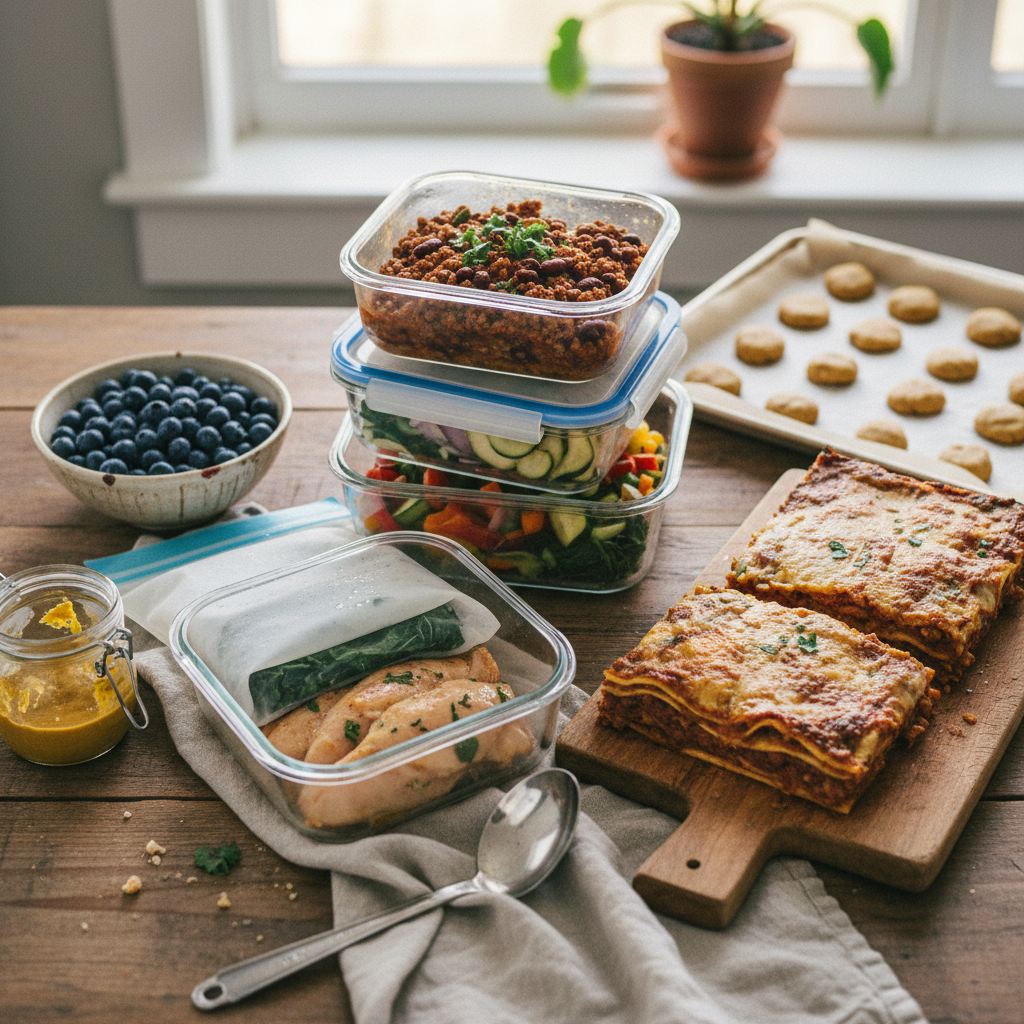
Freezing preserves many foods, but not everything holds up. Items with high water content (lettuce, cucumbers), dairy-based sauces, and fried foods freeze poorly due to texture changes. Soups, stews, baked goods, blanched vegetables, and raw meats freeze beautifully. The key is managing moisture and air exposure. Properly freezing and thawing food saves you time and money while reducing waste, making your freezer a powerful kitchen ally.
Your freezer is one of the most powerful tools in your kitchen. It isn't just for ice cream and forgotten leftovers. When used correctly, it’s a time machine, a money-saver, and your secret weapon for getting a great meal on the table, fast. But we've all experienced a freezing failure: a watery, mushy container of something that was once delicious.
The secret is knowing what freezes well, what doesn’t, and why. Understanding the simple science behind freezing helps you make smart choices, reduce food waste, and turn your freezer from a frosty tundra into a curated library of future meals. This guide will walk you through exactly that.
What Foods Freeze Beautifully?
Think of this as your freezer's greatest hits list. These foods and dishes are champions of chilling, maintaining great texture and flavor after a stint in the deep freeze. Stock up on these when they're on sale or batch-cook them on a quiet weekend.
* **Soups, Stews, Chilis, and Curries:** Broth-based dishes are ideal for freezing. Leave out any dairy (like cream or yogurt) until you reheat. Cool completely, then freeze in portion-sized containers. * **Raw Meat, Poultry, and Seafood:** Your freezer is perfect for storing proteins. For best results, remove them from their store packaging. Wrap individual portions tightly in plastic wrap or butcher paper, then place them in a freezer bag, squeezing out all the air. This prevents freezer burn and makes it easy to thaw only what you need. * **Baked Goods:** Most breads, muffins, cookies, and brownies freeze wonderfully. You can freeze an entire loaf of bread or individual slices. Let them cool completely, then wrap tightly. When you’re ready, just thaw at room temperature or toast from frozen. * **Blanched Vegetables:** Vegetables like broccoli, green beans, peas, and corn freeze much better after a quick blanch. This process involves boiling them for a minute or two, then plunging them into an ice bath to stop the cooking. This helps preserve their color, texture, and nutrients. * **Most Fruits:** Berries, bananas (peeled), peaches, and mangoes are great for freezing. Wash and dry them, then spread them in a single layer on a baking sheet to freeze individually. Once solid, transfer them to a freezer bag. This prevents clumping and is perfect for smoothies, baking, or oatmeal toppings. * **Cooked Grains and Beans:** Save time on future meals by freezing cooked rice, quinoa, farro, chickpeas, and black beans. Cool and freeze in bags, laying them flat to save space.
What Foods Should You Avoid Freezing?
Some foods just don't survive the freezing and thawing process with their dignity intact. Freezing these items often results in a mushy, watery, or separated mess. It's best to enjoy these fresh.
* **Vegetables with High Water Content:** Lettuce, cucumbers, radishes, celery, and raw tomatoes become limp and watery upon thawing. Their cellular structure is destroyed by ice crystals. * **Cream-Based Soups and Sauces:** Dairy has a tendency to separate or curdle when frozen, resulting in a grainy texture. This includes cream of mushroom soup, Alfredo sauce, and yogurt-based sauces. * **Mayonnaise and Egg-Based Sauces:** Mayonnaise will separate and become oily. Dishes like tuna salad or coleslaw are a definite no-go. * **Fried Foods:** The crispy, crunchy coating on fried chicken or french fries will turn soggy and sad after a trip to the freezer. * **Whole Eggs in Their Shells:** The liquid inside an egg will expand as it freezes, causing the shell to crack and creating a potential mess and safety hazard. * **Soft Cheeses:** High-moisture cheeses like cottage cheese, ricotta, and cream cheese become watery and grainy. Hard cheeses like cheddar or Parmesan, however, can be frozen, especially if you plan to melt them.
Why Some Foods Freeze Poorly: The Science of Ice Crystals
The difference between a food that freezes well and one that doesn't comes down to one thing: water. Specifically, it's about how water behaves when it freezes. When water turns to ice, it expands and forms crystals. In a slow-freezing home freezer, these ice crystals have time to grow large and sharp.
Think of a cucumber. It's mostly water held within delicate cell walls. When you freeze it, those big ice crystals puncture and shred the cell walls. When it thaws, the water leaks out, and the cucumber's structure collapses. What you're left with is a floppy, watery mess.
Now, compare that to a stew. The ingredients have already been cooked down, and their structure is different. While ice crystals still form, the overall dish is a matrix of solids and liquid that holds up much better. Blanched vegetables work because the brief cooking process alters their enzymes and cellular structure just enough to withstand freezing more gracefully.
For dairy, the issue is separation. Milk, cream, and cheese are emulsions- mixtures of fat and water. Freezing breaks that emulsion. The water freezes first, separating from the fat globules. Upon thawing, they don't always want to mix back together, leaving you with a curdled or grainy texture.
Best Practices for Freezing Food
How you freeze is just as important as what you freeze. Follow these simple rules to ensure the best quality and safety.
1. **Cool It Down:** Never put hot food directly into the freezer. It will raise the temperature of the entire freezer, partially thawing nearby items. Let food cool to room temperature on the counter, then chill it in the fridge before freezing. 2. **Use the Right Containers:** Airtight is non-negotiable. Freezer-safe bags, glass containers with tight lids, or plastic deli containers all work well. Leave about a half-inch of headspace for liquids to expand. 3. **Remove Air:** Air is the enemy of frozen food. It causes freezer burn- those dry, discolored spots on your food. Squeeze as much air as possible out of freezer bags. For containers, press a piece of plastic wrap directly onto the surface of the food before sealing the lid. 4. **Label Everything:** Your memory isn't as good as you think it is. Use a permanent marker to label every container with what it is and the date you froze it. This helps you use older items first. 5. **Freeze in Usable Portions:** Freeze soup in single servings for quick lunches. Freeze ground beef in one-pound portions. This prevents you from having to thaw a giant block of chili when you only need one bowl.
Inspired by reporting from Kitchen Tutor.
Frequently asked
- What is freezer burn, and is it safe to eat?
- Freezer burn happens when frozen food is exposed to air, causing dehydration. It appears as grayish-brown, leathery spots. While it's not unsafe to eat, freezer-burned areas will have a dry, unpleasant texture and off-flavor. For the best results, you can trim away the affected spots before or after cooking. Preventing it by using airtight containers and removing excess air is the best strategy.
- Can I refreeze food that has already been thawed?
- It depends on how it was thawed. If you thawed raw meat or a cooked meal safely in the refrigerator, you can refreeze it without cooking, though you may notice a loss in quality and texture. However, you should never refreeze any food that was thawed on the counter or in the microwave, as bacteria may have had a chance to grow.
- How long does food last in the freezer?
- Food stored consistently at 0°F (-18°C) will be safe indefinitely. However, its quality degrades over time. For best flavor and texture, use most cooked dishes within 2-4 months. Raw ground meats are best within 3-4 months, while whole cuts of poultry or meat can last up to a year if wrapped properly. Always label and date your food so you know what to use first.
- Can you freeze milk and eggs?
- Yes, with some caveats. Milk can be frozen, but it will separate and may appear grainy when thawed. It's best reserved for cooking or baking rather than drinking. You can't freeze eggs in their shells, but you can crack them into a bowl, whisk them gently, and freeze the mixture in an airtight container or ice cube tray for later use in scrambles or baking.
- Why do potatoes turn grainy when frozen?
- Raw potatoes have a very high water content. When frozen, large ice crystals form and rupture their cell walls. Upon thawing, they release this water and their starch structure changes, resulting in a mushy, watery, and grainy texture. However, potatoes that are part of a cooked dish like a stew, or fully cooked mashed potatoes, freeze much more successfully.