A Practical Guide to Buying and Using an Air Fryer
Thinking about getting an air fryer? This guide explains what to look for, how they work, and how to get crispy, delicious results every time.
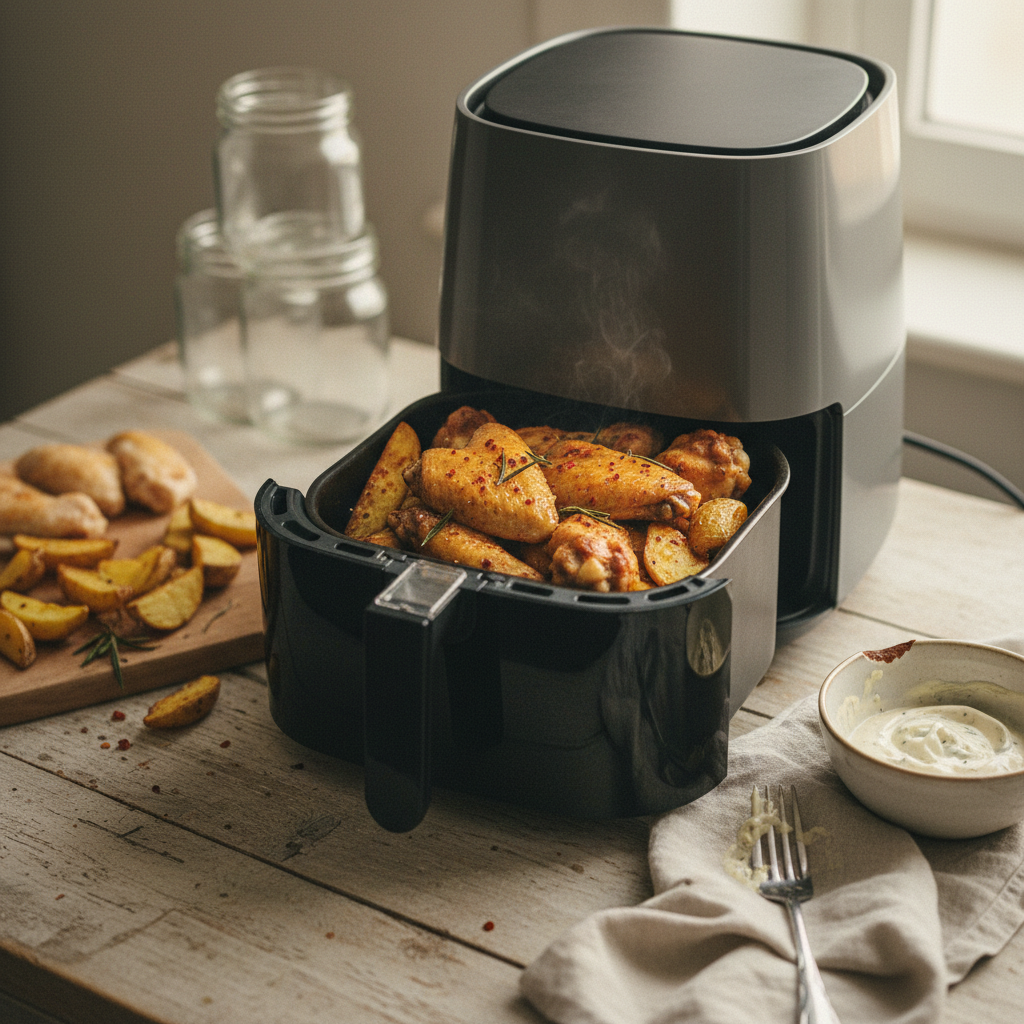
An air fryer is a compact countertop convection oven that circulates hot air to cook food quickly, making it crispy with less oil. When choosing one, consider size, style (basket vs. oven), and controls. For the best results, avoid overcrowding the basket, use a small amount of oil, and shake food halfway through cooking. It excels at cooking frozen foods, vegetables, and reheating leftovers.
It seems like everyone is talking about air fryers, and for good reason. These countertop powerhouses promise crispy, crunchy food with a fraction of the oil used in deep-frying, and they do it faster than a conventional oven. If you're curious but not sure where to start, you've come to the right place. Think of this as your friendly, no-nonsense guide to choosing the right air fryer for your kitchen and using it like a pro from day one.
So, What Exactly Is an Air Fryer?
First, let's clear up the biggest misconception. An air fryer doesn't actually “fry” food. An air fryer is a small, powerful countertop convection oven. That’s it. It has a heating element and a strong fan that circulates hot air at a high speed. This concentrated, circulating heat is what cooks the food and creates a crisp, brown exterior.
Here’s why that’s so effective: by surrounding the food with constantly moving hot air, an air fryer mimics the effects of being submerged in hot oil. The rapid air flow wicks away surface moisture while the high heat initiates the Maillard reaction, a chemical process that creates the delicious browning and savory flavors we associate with fried and roasted foods. The main difference is that it uses that hot air, plus a tiny bit of oil, to achieve the effect, rather than a whole pot of sputtering fat.
How to Choose the Right Air Fryer
Walking into the appliance aisle can be overwhelming. Air fryers come in all shapes, sizes, and price points. Let's break down the key factors to consider so you can find the perfect one for your needs.
* **Size and Capacity:** Air fryer capacity is measured in quarts or liters. The right size for you depends on how many people you typically cook for. * **2-4 Quarts:** Perfect for one or two people. Ideal for small kitchens, dorm rooms, or if you plan to use it mainly for side dishes or single-serving meals. * **5-7 Quarts:** The sweet spot for most families of three to five. This size can typically handle a whole bag of frozen fries, several chicken breasts, or a generous portion of vegetables. * **8+ Quarts:** Best for larger families or if you love to entertain. These larger models, often in an oven style, can cook a small chicken or multiple types of food at once.
* **Style: Basket vs. Oven:** This is one of the most important decisions. There are two main designs. * **Basket-Style Air Fryers:** These are the most common type. They feature a slide-out basket or drawer. They are generally more compact and excellent for foods you need to shake frequently, like french fries and tots. The focused cooking chamber often makes them slightly faster and crispier for smaller batches. * **Air Fryer Ovens:** These look like a modern toaster oven. They have a larger interior capacity with racks, allowing you to cook more food in a single layer or even cook two different foods at once. Many come with extra functions like toasting, baking, broiling, and even a rotisserie for chicken. They are more versatile but take up more counter space.
* **Controls: Digital vs. Analog:** * **Analog (Dial) Controls:** These feature simple knobs for time and temperature. They are straightforward, durable, and intuitive. However, they lack the precision of digital controls. * **Digital (Button) Controls:** These offer a precise LED screen for setting time and temperature. Many also come with pre-programmed settings for common foods like fries, chicken, or fish. They offer more control but can have a slight learning curve.
Key Tips for Great Air Fryer Results
Once you've got your new appliance home, a few simple techniques will make all the difference. Following these rules will help you avoid common pitfalls and get that perfect crispy-on-the-outside, tender-on-the-inside texture.
1. **Don't Crowd the Basket.** This is the number one rule of air frying. The magic comes from air circulation. If you pile food on top of itself, the air can't reach every surface, and you'll end up with steamed, soggy spots. Cook in a single layer, and if you need to make more, cook in batches. It's better to do two fast, crispy batches than one slow, soggy one. 2. **Use a Little Bit of Oil.** While they are marketed as a low-oil cooking method, they are not a *no-oil* method. A light coating of oil-just a teaspoon or two tossed with your vegetables or a quick spray on chicken wings-helps facilitate browning and ensures maximum crispiness. Use a high-smoke-point oil like avocado, canola, or grapeseed oil. 3. **Shake, Flip, or Rotate.** Because the heat source is at the top, the food closest to it will cook and brown the fastest. For even cooking, you need to move your food around. For small items like fries or cubed vegetables, give the basket a good shake halfway through cooking. For larger items like chicken patties or pork chops, flip them over midway. 4. **Adjust Your Recipes.** Air fryers cook much faster than conventional ovens. As a general rule, reduce the oven temperature called for in a recipe by 25°F and cut the cooking time by about 20%. Always check on your food early. You can always add more time, but you can’t fix burned food.
When is an Air Fryer Worth It?
So, is an air fryer just another gadget destined to collect dust? For many of us, the answer is a resounding 'no.' It truly shines for certain tasks. It’s arguably the best way to cook any frozen, pre-fried food like french fries, tater tots, or chicken nuggets-they come out far crispier than in an oven. It's fantastic for roasting vegetables like broccoli, cauliflower, and Brussels sprouts, giving them a delightful char in under 15 minutes.
It’s also an absolute champion at reheating leftovers. Yesterday's pizza gets a crispy crust and perfectly melted cheese, and leftover fried chicken becomes miraculous again. If you often find yourself cooking for one or two, it's a great way to make a quick, satisfying meal without waiting for a large oven to preheat. For weeknight speed and amazing texture, it's a tool that earns its counter space.
Inspired by reporting from Kitchen Tutor.
Frequently asked
- Do I really need to preheat my air fryer?
- While not always required, preheating for 3-5 minutes usually provides better results, especially for foods that need a good sear. It helps the food to start cooking and crisping immediately. For longer-cooking items or simply reheating leftovers, you can often skip this step without a major difference in the final product.
- Can I put aluminum foil or parchment paper in an air fryer?
- Yes, but with care. Ensure foil or parchment is always weighed down by food so it doesn't fly into the heating element, which is a fire hazard. Never place it in the basket during preheating. Using special perforated parchment liners made for air fryers is a great option because it allows air to circulate while still making cleanup easier.
- How do I clean my air fryer properly?
- First, unplug it and let it cool completely. Wash the removable basket and drawer with warm, soapy water and a non-abrasive sponge. For stubborn, baked-on grease, soak the parts in hot, soapy water for about 20 minutes before scrubbing. Most baskets are dishwasher-safe, but check your manual. Wipe the interior with a damp cloth.
- How do I convert a regular oven recipe for an air fryer?
- A good starting point is to reduce the recipe's recommended temperature by 25°F (about 15°C) and reduce the cooking time by about 20%. Because air fryers cook so quickly and intensely, it's crucial to check for doneness earlier than you normally would. You can always add a few more minutes if needed.
- Is air-fried food actually healthier?
- Compared to deep-frying, yes. Air frying can reduce the fat and calorie content of foods like french fries or chicken wings by 70-80% because it uses tablespoons of oil instead of cups. However, compared to baking or roasting, the health benefits are minimal. Its primary advantage is achieving a fried-like texture with significantly less oil.