Choosing a Dutch Oven: A Practical Buying Guide
Ready to buy a Dutch oven? We'll help you choose the right material, size, and shape for your kitchen, making this versatile pot a lifelong investment.
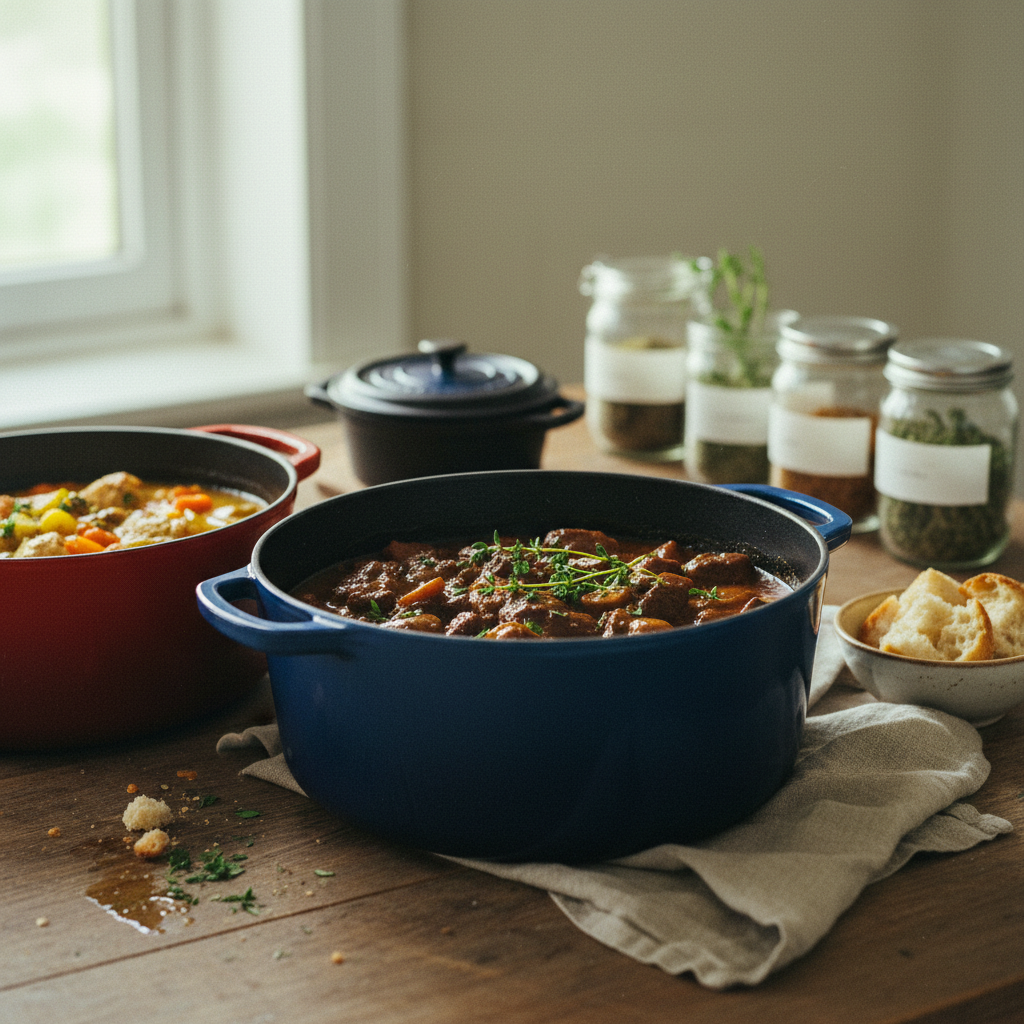
A Dutch oven is a heavy, lidded pot designed for slow cooking, braising, and baking. When choosing one, prioritize an enameled cast iron model between 5 and 7 quarts, which offers the best balance of heat retention, simple maintenance, and versatility for most home kitchens. Consider both round and oval shapes based on what you cook most, from stews to whole chickens.
There are few pieces of cookware that inspire as much devotion as the Dutch oven. It's the ultimate kitchen workhorse, a one-pot wonder that can sear a roast on the stovetop, braise it for hours in the oven, and then look beautiful on your dinner table. But staring at a wall of them at a store can be overwhelming. They come in different materials, sizes, shapes, and a rainbow of colors.
So how do you choose the right one? Let's break it down. A Dutch oven is a heavy-walled cooking pot with a tight-fitting lid, designed to hold and distribute heat evenly over long periods. Making the right choice means getting a piece of cookware that will last you a literal lifetime.
What material is best for a Dutch oven?
This is the biggest decision you'll make. The two main contenders are enameled cast iron and bare cast iron. While other materials exist (like ceramic or stainless steel), cast iron is the classic choice for a reason: its ability to absorb, hold, and radiate heat is unmatched.
* **Enameled Cast Iron:** This is the most popular choice for most home cooks. It's a cast iron pot coated with a layer of non-reactive, smooth enamel. Think of it as a cast iron core with a protective, easy-to-use shell. * **Pros:** Easy to clean, does not require seasoning, non-reactive (you can cook acidic foods like tomato sauce or citrus without worry), and often comes in beautiful colors. * **Cons:** The enamel can chip if you drop it or use metal utensils carelessly. They can also be more expensive than their bare counterparts.
* **Bare Cast Iron:** This is the traditional, rustic option. It's a single piece of molded iron that needs to be seasoned-a process of baking on layers of oil to create a natural, non-stick patina. * **Pros:** Extremely durable (it's a hunk of iron), develops a fantastic non-stick surface over time, and is generally less expensive. * **Cons:** Requires regular maintenance (seasoning) to prevent rust, is reactive with acidic foods (which can strip seasoning and impart a metallic taste), and is heavier than an enameled version of the same size.
**The verdict:** For most people, an enameled cast iron Dutch oven is the best choice. It offers 90% of the heating benefits of bare cast iron with far greater ease of use and versatility. Unless you are a dedicated cast iron enthusiast who enjoys the seasoning process, go with enamel.
What size Dutch oven do I need?
Dutch ovens are sold by volume, typically in quarts. Getting the right size is critical. Too small, and you'll be crowding ingredients; too large, and it becomes a heavy, inefficient monster to heat and clean. Here’s a general guide:
1. **3 to 4 Quarts:** Perfect for individuals or couples. This size is great for smaller batches of soup, side dishes, braising a few chicken thighs, or baking a small loaf of bread. 2. **5 to 7 Quarts:** This is the sweet spot and the most versatile size for most households. A 5.5 or 6-quart Dutch oven can comfortably serve 4-6 people, handle a whole chicken, a generous batch of chili, or a standard-sized loaf of no-knead bread. If you're buying your first and only Dutch oven, get one in this range. 3. **8 Quarts and larger:** Best for large families (6+ people), serious batch cookers, or those who frequently cook big roasts like a pork shoulder or pot roast. Keep in mind that these are very heavy when empty and can be extremely difficult to move when full.
When in doubt, it's often better to size up slightly. You can always cook a smaller amount in a larger pot, but you can't fit more food into a pot that's too small.
Round vs. Oval: Does Shape Matter?
Yes, shape makes a difference, primarily in how you use the pot on the stovetop and what you plan to cook in it.
* **Round:** A round Dutch oven is the most versatile option. It fits perfectly over a standard round stovetop burner, which means you get even heat distribution for searing and sautéing. It's the ideal shape for soups, stews, chilis, and baking round loaves of bread.
* **Oval:** An oval Dutch oven is designed for longer cuts of meat. It's the perfect vessel for a whole chicken, a leg of lamb, a pork loin, or even braising spare ribs. The downside is that it doesn't fit well on a standard burner; the ends will hang over, creating cooler spots. This makes searing less efficient.
**The verdict:** For your first Dutch oven, a round one is the most practical choice. Its stovetop performance is superior, and it's suitable for the widest range of recipes. If you find you're often trying to squeeze a roast into your round pot, then an oval might be a great second addition to your collection.
Key Features to Look For
Beyond material, size, and shape, a few smaller details can make a big difference in day-to-day use.
* **Handles:** Look for wide, looped handles. You need to be able to get a secure grip with bulky oven mitts on. Small, tab-like handles can be treacherous when you're lifting a 20-pound pot of bubbling-hot liquid out of the oven. * **Lid:** The lid should be heavy and fit snugly to trap moisture. Some lids have self-basting nubs on the underside, which help drip condensation back onto the food, but a tight fit is the most important feature. * **Lid Knob:** Check the material of the knob. Many standard knobs are phenolic (a type of plastic) and are only oven-safe up to about 400°F. If you plan to bake bread at higher temperatures, look for a pot that comes with a metal knob, or be prepared to buy one separately (they are easy to swap out). * **Interior Color:** Most enameled Dutch ovens come with either a light (sand or white) or black enamel interior. A light interior makes it much easier to monitor browning and see the development of *fond*—the delicious browned bits at the bottom of the pan that form the base of many sauces.
Inspired by reporting from Kitchen Tutor.
Frequently asked
- Can I use a Dutch oven on an induction cooktop?
- Yes, most Dutch ovens, especially those made from cast iron (both bare and enameled), are induction-compatible because they have a magnetic base. You can test any pot for induction compatibility by seeing if a magnet sticks to the bottom. Always check the manufacturer's specifications, but as a rule, cast iron is a great choice for induction cooking due to its excellent heat retention.
- How do I clean a Dutch oven?
- For an enameled Dutch oven, let it cool a bit, then wash with warm, soapy water and a non-abrasive sponge. For stuck-on food, you can simmer water in it for a few minutes or make a paste of baking soda and water to gently scrub. For bare cast iron, scrub with hot water and a stiff brush, dry it immediately and thoroughly, and wipe on a thin layer of cooking oil.
- Is an expensive Dutch oven worth it?
- While high-end brands offer exceptional quality control, lifetime warranties, and superior enamel coatings that resist chipping, many mid-range Dutch ovens perform almost as well for a fraction of the price. The core function of holding and distributing heat is very similar across brands. For most home cooks, a moderately priced Dutch oven is a fantastic investment that will last for many years with proper care.
- What's the difference between a Dutch oven and a stockpot?
- A Dutch oven is made of a heavy material like cast iron for superior heat retention, making it ideal for low-and-slow cooking like braising and baking. A stockpot is usually made of a lighter metal like stainless steel or aluminum, designed to heat up quickly for boiling liquids like water for pasta or making stock. Their functions are quite different.
- Do I really need a Dutch oven?
- While you can cook without one, a Dutch oven is one of the most versatile tools in the kitchen. It excels at searing, frying, braising, stewing, and baking bread. If you enjoy one-pot meals that can go from stovetop to oven to table, or if you love making soups and slow-cooked roasts, a Dutch oven is an incredibly useful investment that simplifies cooking and delivers amazing results.