Healthy Eating Basics: A Simple Guide for Home Cooks
Stop overthinking healthy eating. This practical guide focuses on simple principles and cooking techniques to help you build nourishing, delicious meals at home without the stress.
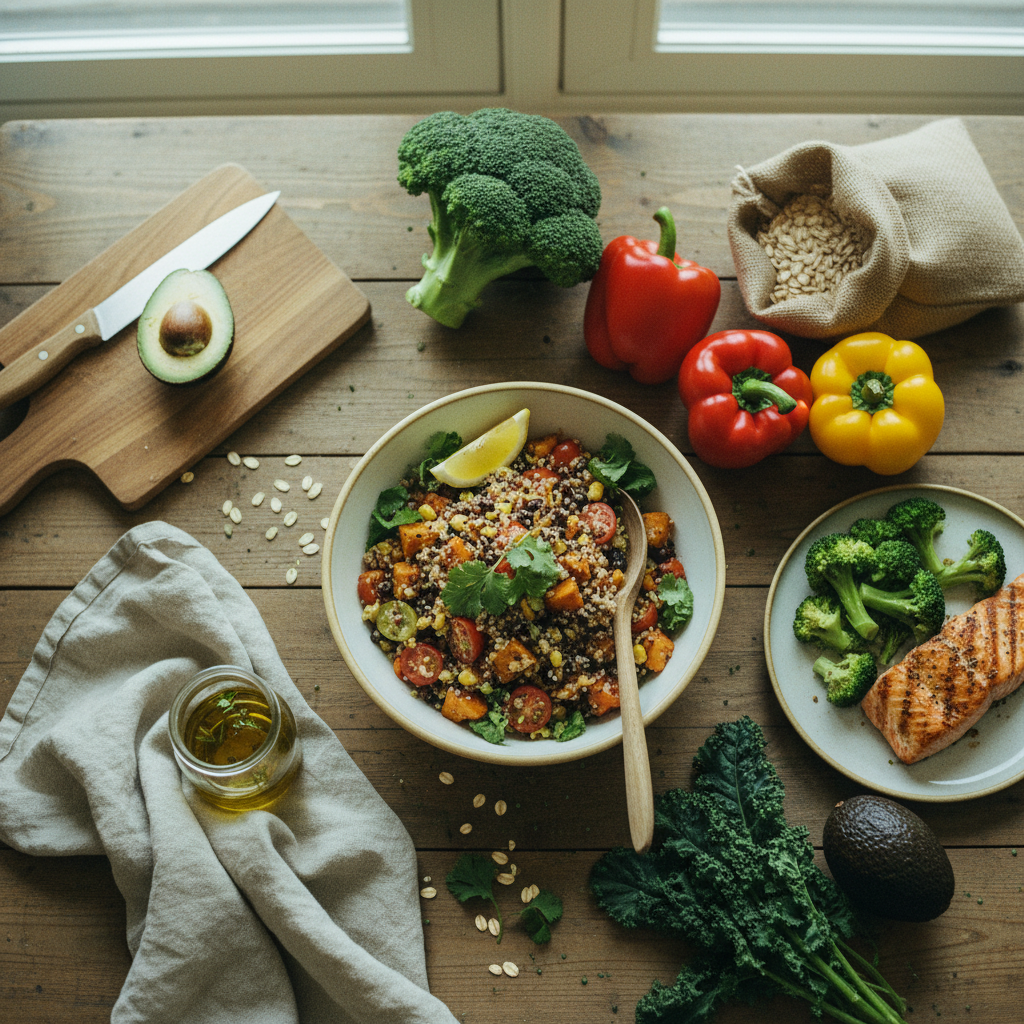
Healthy eating basics are foundational principles focused on consuming a variety of whole foods, balancing macronutrients, and using simple cooking methods to create nourishing meals. It's not about strict diets or deprivation. Instead, it’s a flexible approach to incorporating more vegetables, lean proteins, healthy fats, and whole grains into your daily routine, shifting the focus from restriction to abundance and flavor.
Navigating the world of healthy eating can feel overwhelming. With endless advice, conflicting rules, and trendy diets, it's easy to feel like you need a degree in nutrition just to make dinner. But here in the Kitchen Tutor kitchen, we believe it's much simpler than that.
Healthy eating isn't about restriction; it's about abundance. It’s not a rigid set of rules, but a flexible set of skills. It's less about what you cut out and more about what you add in-more flavor, more nutrients, and more enjoyment from the food you cook yourself. This guide will walk you through the core principles, not as a diet plan, but as a foundation for a lifetime of delicious, nourishing home cooking.
What Are the Core Principles of Healthy Eating?
At its heart, healthy eating is about consuming a variety of whole foods that are as close to their natural state as possible. Think of an apple instead of apple juice, or a baked potato instead of potato chips. By focusing on whole ingredients, you automatically get more of the good stuff-fiber, vitamins, and minerals-and less of the added sugars, sodium, and unhealthy fats often found in processed foods.
Here are a few guiding principles to keep in mind: * **Focus on Whole Foods:** These are single-ingredient foods. Think vegetables, fruits, eggs, chicken, fish, nuts, and whole grains like oats and quinoa. They don't have a long, complicated ingredient list because they *are* the ingredient. * **Prioritize Plants:** Make vegetables, fruits, legumes, and nuts the star of your plate. They are packed with fiber, which aids digestion and helps you feel full, along with essential vitamins and antioxidants. Aim for a wide variety of colors to get a diverse range of nutrients. * **Choose Lean Proteins:** Protein is vital for building and repairing tissues and keeping you satisfied after a meal. Good sources include poultry, fish, eggs, beans, lentils, tofu, and Greek yogurt. * **Include Healthy Fats:** Fat is not the enemy! Your body needs it for energy and cell growth. Focus on unsaturated fats from sources like avocados, olive oil, nuts, and seeds. These fats add incredible flavor and contribute to satiety.
How Can I Build a Balanced Plate?
A visual guide can be one of the most powerful tools for building better habits. Forget counting every calorie or gram. Instead, use your plate as a map. This is often called the "Plate Method," and it's a simple way to ensure you're getting a good balance of macronutrients at every meal.
Imagine your dinner plate divided into sections: * **Half Your Plate: Vegetables and Fruits.** This is your foundation. Fill half your plate with non-starchy vegetables like broccoli, leafy greens, bell peppers, tomatoes, or cauliflower. They are low in calories but high in volume and nutrients, filling you up without weighing you down. * **A Quarter of Your Plate: Lean Protein.** Dedicate one quarter to a source of protein. This could be a piece of grilled chicken or fish, a scoop of black beans, or a portion of tofu. * **A Quarter of Your Plate: Complex Carbohydrates.** The final quarter is for energizing carbs. Choose whole grains like brown rice, quinoa, or whole-wheat pasta, or opt for starchy vegetables like sweet potatoes or corn.
What about fats? Healthy fats are woven into the meal-perhaps you used olive oil to roast your vegetables, topped your salad with avocado, or sprinkled nuts over your dish.
Which Cooking Methods Are Best for Healthy Meals?
The way you cook food is just as important as the food itself. Simple cooking techniques can enhance flavor and preserve nutrients without relying on excessive amounts of oil, butter, or heavy cream.
Let's compare two common approaches:
**High-Heat Methods (Sautéing, Roasting, Grilling):** These methods use high temperatures to cook food quickly, creating delicious browning and caramelization (known as the Maillard reaction). A quick sauté in a hot pan with a teaspoon of oil is a fantastic way to cook vegetables and lean proteins. Roasting brings out the natural sweetness in vegetables like broccoli and sweet potatoes. The key is to use just enough fat to prevent sticking and facilitate browning, not to drench the food.
**Gentle-Heat Methods (Steaming, Poaching, Braising):** These techniques use moisture and lower temperatures. Steaming is perfect for delicate vegetables like asparagus or green beans and for fish, as it preserves their nutrients and texture beautifully. Poaching cooks ingredients gently in a flavorful liquid (like broth or water with herbs), keeping them moist and tender. Braising starts with a quick sear for flavor and then finishes with a long, slow simmer in liquid, making tougher cuts of meat incredibly tender.
**Why It Works:** Both high-heat and gentle-heat methods empower you to build flavor from the ingredients themselves. Instead of masking food with heavy sauces or deep-frying, you're using heat and moisture to unlock its natural potential. This gives you complete control over fat and sodium levels while maximizing taste.
How Do I Shop Smarter for Healthy Ingredients?
A healthy kitchen starts with a healthy grocery cart. A few strategic habits can transform your shopping trips from a chore into a simple, efficient part of your routine.
1. **Shop the Perimeter First:** Grocery stores are typically designed with fresh foods around the outer walls. Start in the produce section, then move to the meat, poultry, and dairy sections. This ensures you're filling your cart with whole foods before you even venture into the center aisles, where most of the highly processed items live. 2. **Read the Ingredient List:** When buying a packaged food, flip it over. A good rule of thumb is to look for a short list of ingredients you can pronounce. Be especially mindful of added sugars (which can have many names, like high-fructose corn syrup, dextrose, or cane syrup), sodium, and saturated fats. 3. **Embrace the Freezer Aisle:** Don't skip the frozen section! Frozen fruits and vegetables are picked at peak ripeness and flash-frozen, locking in their nutrients. They are just as healthy as fresh-and sometimes more so. They're also incredibly convenient and can help reduce food waste. 4. **Plan Loosely:** You don't need a rigid, hour-by-hour meal schedule. Simply decide on 3-4 dinners you'd like to make for the week ahead. This simple step gives you a clear shopping list, prevents last-minute takeout decisions, and reduces impulse buys.
By building these simple skills, healthy eating becomes a natural, enjoyable part of your daily life. It's about cooking smart, eating well, and feeling great.
Inspired by reporting from Kitchen Tutor.
Frequently asked
- Is olive oil actually healthy?
- Yes, extra virgin olive oil is a healthy fat rich in monounsaturated fats and antioxidants. It is excellent for dressings and finishing dishes. For high-heat cooking like searing, an oil with a higher smoke point, such as avocado oil, can be a better choice. The key is using it in moderation as part of a balanced diet, as it is still calorie-dense.
- Do I have to give up carbs to eat healthy?
- Absolutely not. The key is choosing the right kind of carbohydrates. Complex carbs like whole grains (quinoa, brown rice, oats), legumes, and starchy vegetables provide sustained energy and valuable fiber. It is refined carbs like white bread and sugary snacks that are best enjoyed in moderation, as they offer little nutritional value in comparison.
- Are frozen vegetables as good as fresh?
- Yes, frozen vegetables are a fantastic choice. They are typically picked and flash-frozen at peak ripeness, which locks in nutrients. In some cases, they can be even more nutrient-dense than fresh produce that has traveled a long distance. They are also convenient, budget-friendly, and a great way to reduce food waste in your kitchen.
- What's the easiest way to eat more vegetables?
- Start by adding them to foods you already love. Mix finely chopped zucchini or carrots into pasta sauce, add a handful of spinach to a smoothie, or bulk up soups and stews with extra veggies. Another great strategy is to have pre-cut vegetables like bell peppers, cucumbers, and celery ready for quick snacks with a dip like hummus.
- How can I reduce my sugar intake without feeling deprived?
- Focus on reducing *added* sugars found in processed foods and drinks, not the natural sugars in whole fruit. Swap sugary sodas for sparkling water with lemon. Read labels to identify hidden sugars in sauces, dressings, and yogurt. When you crave something sweet, try reaching for a piece of fruit or a small square of dark chocolate first.