Resting Meat: The Key to Juicier, Tastier Results
Patience is a cook's secret ingredient. Learn the simple science behind letting meat rest, and why this crucial step guarantees a juicier, more flavorful meal.
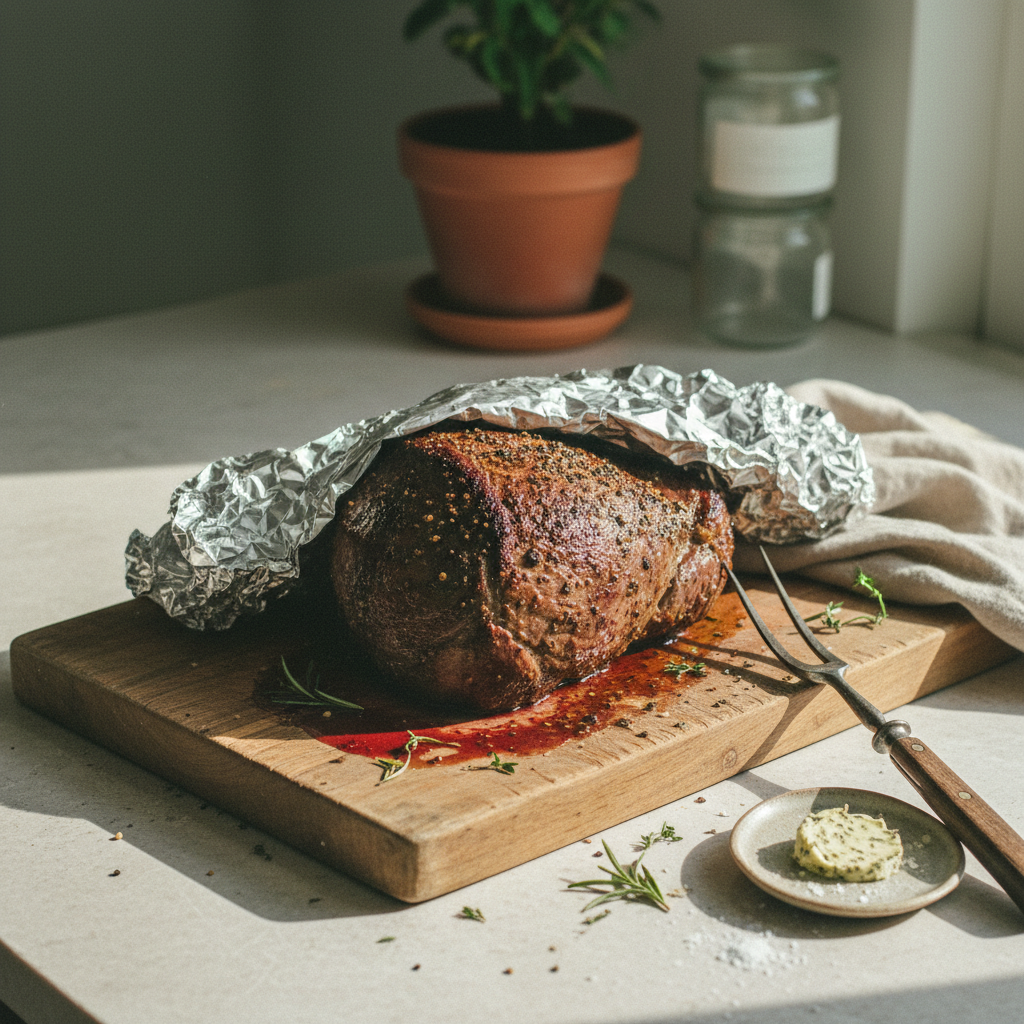
Resting meat allows the juices, which have been driven to the center by the heat of cooking, to redistribute evenly throughout the muscle fibers. This process ensures that when you slice into the meat, the moisture stays inside, resulting in a much juicier and more flavorful bite. Skipping this step causes those flavorful juices to spill out onto your cutting board, leaving you with dry, disappointing meat.
You’ve done everything right. You bought a beautiful cut of meat, seasoned it perfectly, and seared it to a gorgeous, crusty brown. You’ve monitored the internal temperature, pulling it from the heat at the exact moment of perfect doneness. The temptation to slice right in and take a bite is overwhelming. But I’m here to tell you that the most important step is yet to come: doing nothing at all.
This crucial pause is called resting. It’s the final, non-negotiable part of the cooking process that separates a good steak from a truly great one. Resting isn't an old wives' tale or a fussy chef's trick; it's a simple, science-backed technique that guarantees a more flavorful, tender, and juicy result every single time. Let's walk through why this simple act of patience is your ticket to better meat.
What Happens Inside Meat As It Cooks?
To understand why resting works, we first need to look at what happens when meat meets heat. A piece of meat, whether it's a steak, a chicken breast, or a pork roast, is primarily made of muscle fibers bundled together. These bundles contain a lot of water- a lot. When you apply heat, those muscle fibers begin to contract and tighten, kind of like clenching your fist.
As the fibers squeeze together, they push out the moisture they once held. This liquid, full of flavor-packed proteins like myoglobin, has nowhere to go but away from the intense heat at the surface and toward the cooler center of the cut. By the time your steak reaches a perfect medium-rare, a significant portion of its internal moisture is pooled right in the middle. If you were to slice into it immediately, that concentrated pool of juices would have no choice but to rush out and onto your cutting board, leaving you with a sad, gray, and dry piece of meat.
The Science of Resting: How Juices Redistribute
Resting is the gentle, gradual reversal of this process. Once you remove the meat from the heat source- be it a pan, grill, or oven- the muscle fibers begin to relax. As they loosen their grip, they create space for the juices to move back in.
Think of it like a sponge. When you cook the meat, you're wringing out the sponge into its own center. When you let it rest, you're allowing the sponge to slowly soak that liquid back up, distributing it evenly from edge to edge. This reabsorption is driven by a combination of the relaxing fibers and a process called capillary action. The temperature inside the meat also begins to even out, further encouraging this redistribution.
The result? When you finally slice the meat, the juices are locked securely within the muscle fibers instead of being pooled in the center. Each bite is savory and moist, exactly as it should be. The small puddle of juice left on the cutting board is minimal, a testament to your patience.
How Long Should You Rest Meat?
So, how long is long enough? The answer depends entirely on the size and type of the cut. A good rule of thumb is to rest the meat for about half of its total cooking time. For more specific guidance, here are some practical timelines:
* **Small, Quick-Cooking Cuts:** For items like steaks, pork chops, lamb chops, and individual chicken breasts, a rest of **5 to 10 minutes** is sufficient. This gives enough time for the juices to redistribute without the meat getting cold.
* **Medium Roasts:** For cuts like a whole chicken, a pork loin, or a smaller beef roast (under 4 pounds), aim for a rest time of **15 to 20 minutes**. These larger cuts hold more heat and require more time for the internal temperature to equalize.
* **Large Roasts:** For the big showstoppers- like a holiday turkey, a prime rib, or a leg of lamb- a longer rest is essential. Plan for **20 to 30 minutes, or even longer.** A very large turkey can benefit from a rest of up to 45 minutes.
To Tent or Not to Tent?
A common question is whether you should cover the meat with aluminum foil while it rests- a technique known as 'tenting'. There are pros and cons to this, and the right choice depends on the cut.
**When to Tent:** Tenting traps steam, which helps keep the meat warm. This is most useful for larger roasts that have a long rest time (20+ minutes). You don't want your Thanksgiving turkey to be cold by the time you serve it. Loosely tenting it with foil will help maintain a pleasant serving temperature.
**When to Rest Uncovered:** The downside of trapping steam is that it can soften the crispy crust or skin you worked so hard to achieve. For steaks, chops, and anything else where a deep, crunchy sear is a priority, it's best to rest them uncovered. The rest time is short enough that they won't get cold, and you'll preserve that amazing texture.
For the best of both worlds with any cut, rest your meat on a wire rack set over a cutting board or baking sheet. This allows air to circulate underneath, preventing the bottom from becoming soggy.
Don't Forget Carryover Cooking
One final, crucial piece of the puzzle is 'carryover cooking.' Meat is a dense object, and it continues to cook even after you remove it from the heat. The residual heat on the exterior continues to travel inward, raising the internal temperature by several degrees.
The amount of carryover cooking depends on the size of the cut and the cooking temperature. For a steak, the temperature might rise another 3-5°F during its rest. For a large turkey roasted at a high temperature, it could rise as much as 10-15°F.
You must account for this when deciding when to pull your meat from the heat. Always remove your meat from the oven or grill when it is 5 to 10 degrees *below* your final target temperature. Let the rest handle the final few degrees, ensuring you land at your perfect desired doneness, not an overcooked disappointment.
In the end, resting meat isn't just a suggestion; it is a fundamental part of the cooking process. It requires nothing more than a little patience, and the reward- perfectly juicy, flavorful meat- is more than worth the wait.
Inspired by reporting from Kitchen Tutor.
Frequently asked
- Will my meat get cold while resting?
- It will cool slightly on the outside, but thanks to carryover cooking, the internal temperature will actually rise a few degrees before it starts to fall. For larger roasts, tenting with foil can help retain more heat. For a steak, the short rest time won't make it cold; the juiciness you gain is a worthwhile trade for a slight drop in surface temperature.
- Do I need to rest ground meat, like for burgers?
- It's a good idea, but the rest time is much shorter. A 5-minute rest for a burger patty can help it stay juicier, similar to a steak. However, because the fat and muscle are already ground and mixed, the effect is less dramatic than with a whole-muscle cut. Don't stress about a long rest for burgers, but a few minutes helps.
- Can you rest meat for too long?
- Yes. While resting is crucial, letting meat sit for too long, especially smaller cuts, can cause it to become lukewarm or cold. The goal is for the juices to redistribute while the meat is still pleasantly warm. Stick to the recommended times: about 5-10 minutes for steaks and chops, and 15-30 minutes for large roasts.
- What's the best surface for resting meat?
- A wooden cutting board is a great choice as it doesn't pull heat out of the meat as quickly as a metal or stone surface. Placing the meat on a wire rack set over a baking sheet is even better. This allows air to circulate all around the meat, preventing the bottom from steaming and helping to preserve any crust you worked so hard to create.
- Does resting apply to chicken and pork too?
- Absolutely! The principle is the same for all types of muscle, whether it's beef, poultry, pork, or lamb. A chicken breast, pork chop, or lamb loin will be significantly juicier and more tender if allowed to rest properly after cooking. The resting time will vary based on the size and thickness of the cut, just like with steak.