Unlocking Flavor: The Maillard Reaction Explained
Ever wonder what makes toast toasty and steak so savory? It's not magic, it's chemistry. Let's explore the delicious science of the Maillard reaction.
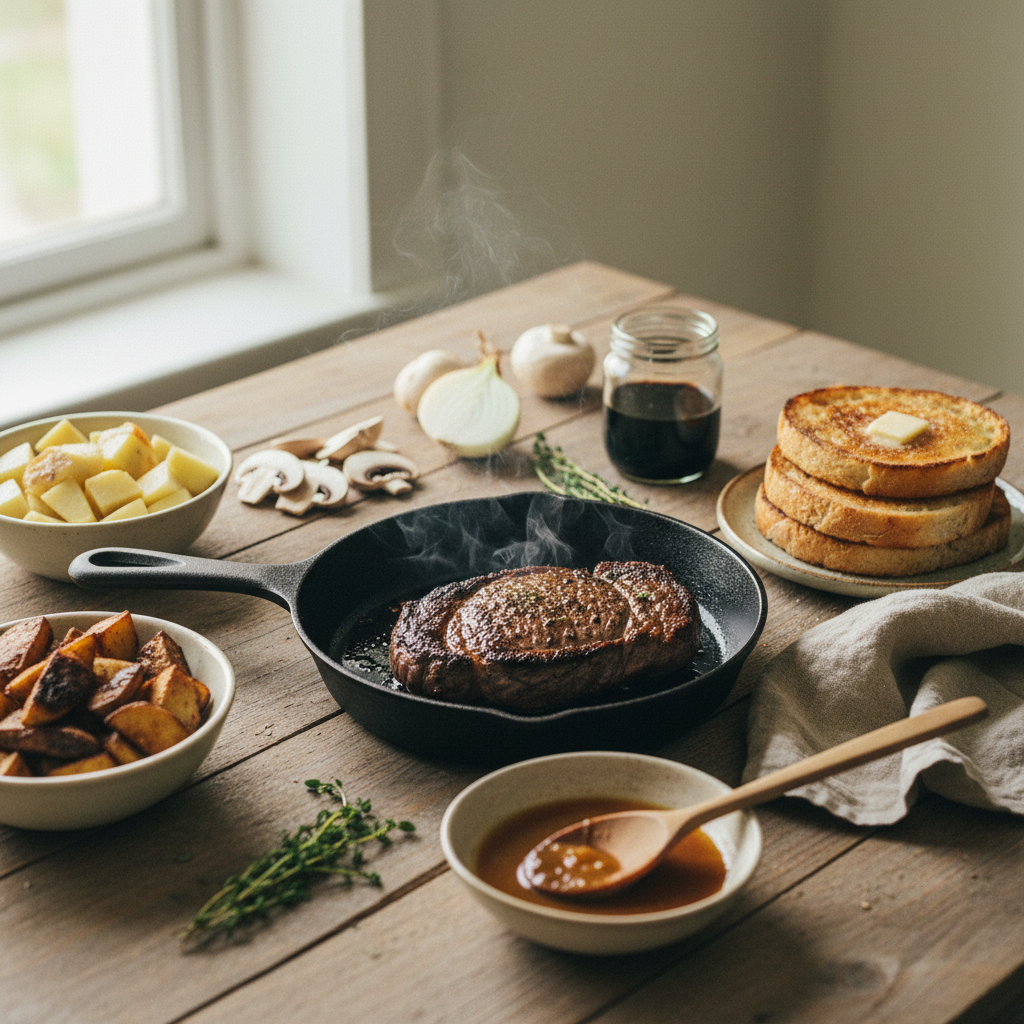
The Maillard reaction is a chemical reaction between amino acids and reducing sugars that gives browned food its distinctive flavor and color. It's the reason a seared steak, toasted bread, or roasted coffee tastes so complex and delicious. Understanding how to encourage it- using high, dry heat- unlocks deeper, more savory flavors in almost everything you cook, from vegetables to meat.
You know that incredible, mouth-watering aroma that fills the kitchen when you sear a steak, toast a slice of bread, or roast vegetables? That deep, savory, complex flavor that makes you close your eyes in appreciation? That’s not just “cooking.” That’s a specific, magical-seeming piece of kitchen chemistry called the Maillard reaction.
It’s one of the most important concepts in cooking, and understanding it is the key to unlocking a new level of flavor in almost everything you make. Once you know what it is and how to achieve it, you’ll stop seeing browning as just a color and start treating it as the flavor-building powerhouse it truly is.
What Exactly Is the Maillard Reaction?
The Maillard reaction is a chemical reaction between amino acids (the building blocks of proteins) and reducing sugars. When heated, they rearrange themselves and create hundreds of new aroma and flavor compounds. It’s flavor creation on a molecular level.
Named after the French chemist Louis-Camille Maillard who first described it in the early 20th century, this reaction is responsible for the signature taste of things like a burger's crust, the golden skin on a roasted chicken, freshly baked bread, and even the flavor of roasted coffee and chocolate. It typically starts to happen around 280°F (140°C).
It’s important to understand that this is not burning. Burning is combustion, and it tastes like carbon- bitter and acrid. The Maillard reaction is a controlled, creative process that builds layers of savory, nutty, and roasted flavors. Think of it as the difference between a perfectly toasted marshmallow and one that caught on fire.
Maillard vs. Caramelization: What's the Difference?
This is a common point of confusion, because both processes create browning and delicious flavors. The key difference is what’s involved. They can even happen at the same time in the same food, but they are distinct processes.
**The Maillard Reaction:** - **What it needs:** Proteins (amino acids) + Sugars + Heat - **Flavor profile:** Savory, meaty, roasted, umami-rich, and complex. - **Temperature:** Starts around 280-330°F (140-165°C). - **Examples:** The crust on a seared steak, the golden-brown surface of a pretzel, roasted coffee beans, the savory notes in fried onions.
**Caramelization:** - **What it needs:** Sugars + Heat (that's it!) - **Flavor profile:** Sweet, nutty, buttery, and slightly bitter (in a pleasant way). - **Temperature:** Starts at higher temperatures, around 320°F (160°C) or more, depending on the type of sugar. - **Examples:** The hard topping on creme brulee, caramel candy, wet and dry caramels, the sweet notes in fried onions.
So, when you cook onions, they undergo both. The Maillard reaction creates savory notes, while the natural sugars in the onions caramelize, creating sweetness. A steak, however, is almost purely Maillard, as it has lots of protein but very little sugar.
How to Get a Great Maillard Reaction
Want that perfect, deep-brown crust on your food every time? The goal is to create the ideal conditions for the reaction to happen efficiently, before your food overcooks on the inside. Follow these rules, and you’ll be a browning expert in no time.
* **1. Get It Dry:** This is the most important rule. Moisture is the enemy of browning. Moisture on the surface of your food will turn to steam, which cools down the pan and prevents the temperature from getting high enough for the Maillard reaction. Always, always pat meat and vegetables thoroughly dry with a paper towel before they hit the pan. * **2. Don't Crowd the Pan:** Giving food space is critical. If you pile too much into a pan, the food will trap steam. Instead of searing, your food will boil in its own juices and turn a sad, limp gray. If you have a lot to cook, do it in batches. A hot, uncrowded pan is a happy pan. * **3. Use the Right Heat:** You need your pan to be hot enough to kickstart the reaction and evaporate any surface moisture quickly. Medium-high heat is usually the sweet spot. If the heat is too low, you'll slowly cook the food without any browning. If it's screaming hot, you risk burning the outside before the Maillard reaction has time to develop its complex flavors. * **4. Give It Time:** Resist the urge to constantly stir or flip your food. The food needs uninterrupted contact with the hot surface to develop a crust. Let it sit for a few minutes until you can see the edges browning and it releases easily from the pan. Patience pays off in flavor. * **5. Consider the Pan:** While you can get browning in a non-stick pan, heavy-bottomed pans made of cast iron or stainless steel are the champions. They retain and distribute heat incredibly well, providing the consistent, powerful energy needed for a deep, even sear.
What Hinders the Maillard Reaction?
Understanding what prevents good browning is just as important as knowing how to achieve it. If your food is coming out pale, one of these factors is likely the cause:
- **Too much moisture:** From not patting food dry, or from an overly watery marinade. Even if you use a marinade, try to pat the surface as dry as possible before cooking. - **A crowded pan:** This is the number one mistake home cooks make. It traps steam, lowers the pan temperature, and leads to soupy, grey results. - **Low temperature:** Starting with a cold pan or using a heat setting that's too low won't allow the surface to reach that critical 280°F threshold. - **Acidity:** Highly acidic environments, like a marinade with a lot of lemon juice or vinegar, can slow down the Maillard reaction. It will still happen, but it may be less intense.
Once you start thinking about the Maillard reaction, you’ll see it everywhere. It's the reason we toast spices, sear scallops, and crave that crispy corner piece of a casserole. It’s not just a step in a recipe- it’s a technique. By mastering the fundamentals of moisture, temperature, and space, you’ll take your cooking from good to truly great.
Inspired by reporting from Kitchen Tutor.
Frequently asked
- Is the Maillard reaction the same as burning?
- No, they are different. The Maillard reaction creates complex, delicious flavors and a golden-brown color. Burning, or combustion, happens at much higher temperatures and breaks food down into bitter, acrid carbon. Think of a perfectly toasted piece of bread versus a piece of charcoal. Good browning is Maillard; black is burned.
- Can the Maillard reaction happen in a microwave?
- Generally, no. Microwaves work by exciting water molecules, which essentially steams food from the inside out. This wet, relatively low-temperature environment is the opposite of what the Maillard reaction needs. Some special 'browning' dishes for microwaves exist, but they use materials that get hot enough to mimic a pan.
- Is the Maillard reaction unhealthy?
- The Maillard reaction itself isn't inherently unhealthy; it's a natural part of cooking. However, very high-heat cooking can form compounds like acrylamide, particularly in starchy foods. To minimize this, aim for golden-brown colors, not dark brown or black. A varied diet and moderate cooking temperatures are always a sensible approach.
- Why won't my chicken or steak brown in the pan?
- There are three likely culprits. First, the food might be too wet- always pat it very dry with a paper towel. Second, the pan isn't hot enough- let it preheat properly before adding food. Third, the pan is too crowded, which traps steam and boils the food instead of searing it. Cook in batches for the best results.
- Does the Maillard reaction happen with vegetables?
- Absolutely! The amazing flavor of roasted Brussels sprouts, seared mushrooms, or crispy roasted potatoes comes from the Maillard reaction. Just like with meat, the key is high, dry heat. This is why roasted or pan-fried vegetables are often much more flavorful than steamed or boiled ones, which lack that delicious browning.